Winter pool maintenance begins as soon as you’re done swimming in the pool. The right winter pool maintenance depends on the type of pool, the severity of the winter and your intended work load. The warm climate routine is intended for locations that don’t face a risk of the pool water freezing, especially the Sunbelt states where the pool water rarely gets below 60?F even in winter.
For Warmer Climates
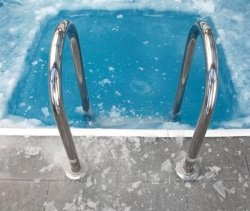 Continue to run the pump so that the water circulates, preventing freezing. However, this requires continuing to chemically treat the water.
Pool chemistry in the winter should be adjusted to a pH of 7.2 to 7.8, pool alkalinity to between 80 and 100 and calcium hardness to 150 to 250. This is done about a week before formally closing the pool in order to prevent scaling and algae growth. When the pH reaches this point and temperatures have dropped, you can run the pool filter at half its prior speed. The chlorine levels should be between 1 and 3 parts per million. Ensure the chlorine is in this range before adding algaecides or pool winterizing chemicals.
If the pool isn’t covered, you must remove all leaves. In the fall, the skimmer will need to be run at least once a week, more often if trees are shedding leaves into the pool. Covering the pool with a mesh cover or solid plastic cover dramatically reduces this hassle. If you cover the pool, make sure you shock it first.
Remove all above ground pool accessories that could be damaged when the weather gets too cold, such as the slide, diving boards, wall fittings and pool toys.
Turn off the chemical feeder so that you don’t over-chlorinate a pool no longer exposed to sunlight, if you cover it. Check the water chemistry bimonthly at a minimum, and add chemicals periodically as needed.
Check the water temperature if you’ve left water in the pool. In some circumstances, you may want to turn on a pool heater to keep the water warm enough that ice doesn’t form in the lines or top layer of the pool. Another solution for this problem is putting a solar cover on the pool to prevent the water from getting too cold, though this may or may not double as a pool cover to keep out all debris.
For Cold Climates
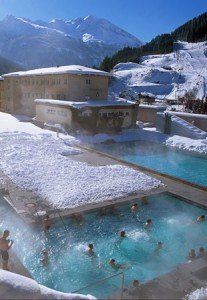 In moderate climates, the pool water level can be lowered but may not need to be drained completely. In fact, depending on the type of pool liner, you may want to keep some water in the pool to act as a thermal buffer so the temperature swings don’t damage the liner. Know whether or not you need to drain the pool before you drain it. However, in general, the water should be four to six inches below the pool skimmer if you don’t drain it entirely.
In some areas, there is a real risk the pool could crack or pop out of the ground, though this is more of an issue with vinyl pools or locations where the ground water actually pushes up against the bottom of the pool.
When running the pool pump doesn’t prevent the water from freezing, you need to drain the pool and its equipment so that the water doesn’t freeze in the pumps and filtration equipment, damaging it. If you will be draining the pool and equipment, make sure that you drain the pump, heaters, filters and all equipment that could be damaged by freezing. Backwash the pool filter before storing it, so that you don’t turn it into a bacterial colony over the winter.
Don’t forget to turn off electric appliances that pose a fire hazard if unattended like pool heaters, lights, pumps and so forth.
You still want to cover the pool in this case so that leaves, dirt and debris don’t accumulate. If you don’t cover the pool, the pool debris needs to be swept up and removed so that you don’t stain the pool surface. Secure the pool cover by putting water bags on it; the edge of the pool cover should be sealed so the wind can’t get under it, blowing leaves and debris underneath it if not blowing the pool cover away.
You can clean off a pool cover periodically by hosing it off, if this won’t blow debris into the pool, so that you don’t risk the pool cover being pulled into the water by the weight of accumulated debris.


Leave a Reply