What type of generator is right for your home? It depends on how close to the Amish lifestyle you’re willing to live while the power is out and how long you expect the power to out. Small camping generators put out one thousand watts up to two thousand watts. This amount of power will let you charge cell phones, laptop and power some lights. You could use it power the refrigerator continuously plus lights and occasionally recharge electronics. Small camping generators are quiet and portable, so you can keep it in the garage or take it with you on a campout to power a few small appliances or recharge electronics. Such a generator might be able to run the AC but nothing else but a few lights.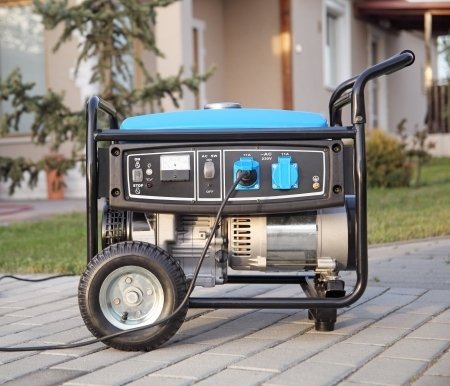
If you’re concerned about keeping the minimum appliances like a refrigerator and/or emergency heater running during an outage, you’ll want a medium emergency generator with one to five thousand watts. This is powerful enough to run your basement 800 watt sump pump, electric furnace and/or refrigerator and other essential appliances like oxygen machines. These would be connected to the supported appliances by an extension cord. If you want to be able to live normally running several rooms in your home, you should select six to eight thousand watt generator. These would be connected via extension cords or switches. Remember to keep the generator outside of your home somewhere with sufficient ventilation to prevent carbon monoxide buildup.
It is rare to find a portable generator that puts out more than seven thousand watts. Once it reaches this size, the gas powered generators phase out to be replaced by natural gas or propane generators. Propane powered generators with this much power will run a remote cabin as with a TV, refrigerator, gaming system and AC going at the same time. If you want to be able to run your entire home when the power is out, a ten to twenty thousand watt generator will run the typical small home. If you run the home’s air conditioner, you’ll only be able to power several other rooms with normal use of appliances like hair dryers and microwave ovens. These generators should be connected to your home via a transfer switch. If you opt for a standby generator with this level of power, you’ll find it is quieter than the noise two portable generators would make and you don’t have to run cords or store gasoline. The other benefit of standby generators is that they usually start automatically when the power goes out instead of relying on a pull cord.
If you live in Florida or another location regularly struck by hurricanes, you should consider a permanent gas powered generator installed next to your home. Gas lines don’t rely on electricity in your area to run, so a natural gas powered generator can provide power when the storm knocks down power lines. And in the aftermath of a hurricane, it could take days or weeks before power is restored. This is where the permanently installed natural gas generator saves money over the hassle and cost of feeding a gas powered generator when prices for such fuel spikes. Natural gas standby generators are recommended instead of propane due to the challenges those who live on the coasts would have finding sufficient propane after a storm. Conversely, if you want to supply power to a remote cabin or farm that already runs off a propane tank, a propane powered standby generator is the best choice.


Leave a Reply