Is it Practical to Install a Central Vacuum System for your home?
Why would you want to do so? And when should you blow off the contractor recommending it?
Benefits of a Central Vacuum System
Your house cleaner can simply plug in the smaller, more compact vacuum to the central vacuum system to clean the room. The house cleaner doesn’t need to lug as large of a vacuum cleaner around.
The central vacuum cleaner system is quieter in general than traditional vacuum cleaners.
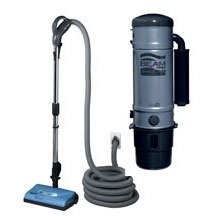 You can use the vacuum extensions on the central vacuum system’s wands to clean high, low, under furniture, on furniture and everywhere else without having to mess with a parade of extensions and tools.
Central vacuums suck all the dirt down to the main filter; there is no risk of dirt and dander getting blown out the back of the unit as the filters clog or the bag fills up.
Central vacuum cleaners may provide better suction than cheap vacuum cleaners, without the risk of overheating the motor from a day of cleaning.
The suction won’t go down over time with the central vacuum system unless your central vacuum’s filter is clogging up.
Cons of a Central Vacuum System
You are spending a lot of money for the convenience of your house cleaner. If lugging a vacuum cleaner around is that much of a concern, consider putting several vacuum cleaners at strategic locations around your house and at least one on every level.
Central vacuum systems waste a lot of electricity if you don’t careful manage it, and it is less energy efficient than a conventional vacuum cleaner in all circumstances.
The central vacuum cleaner system requires a small vacuum head connected by long hoses to the vacuum port in the wall. The convenience of not having to push a 15 pound vacuum cleaner may be lost by the hassle of dealing with long hoses.
The central vacuum system needs to be maintained like an air conditioner. The giant filter needs to be cleaned at least twice a year.
If the central vacuum system fails, such as when its motor goes out, you can’t vacuum the house except after getting a traditional vacuum cleaner – exactly the appliance this system was supposed to replace.
Observations
Manufacturers say that installing a central vacuum cleaner in your home will add several thousand dollars to its resale value, but that is only true for the few people who are used to having a central vacuum system.
You need a location for the large central vacuum system’s motors. Placing them in a basement keeps them cooler, but you may not have the space. Putting them in the garage increases the risk of critters moving in or outdoor dirt clogging up the system.
Central vacuum systems tend to last around ten years. Some conventional vacuum cleaners last that long, though with periodic maintenance like replacing filters, broken belts and vacuum bags. However, the central vacuum system maintenance is more costly and time consuming to do. For example, you may be able to empty the dust bin, but you need a pro to fix its motor – and unlike a smaller vacuum cleaner, you can’t just take it to the repair shop. There is the very real possibility that the only repair person for your central vacuum system is the company that installed it, and they can charge what they want because your only alternative is buying a vacuum cleaner.
When is a Central Vacuum System a Waste?
A central vacuum cleaner is a waste in several circumstances:
• Small House
If the house is less than a thousand square feet, you will never vacuum the house enough to justify the expense of installing it.
• Tile, Wood or Stone Floors Throughout
It is better to sweep solid floors like tile floors, wood floors and stone floors. A vacuum cleaner is not as useful on these surfaces as a mop or broom.
If your carpets hold so much dirt or pet dander that your allergies are killing you, and the salesman recommends a several thousand dollar central vacuum system (and the associated work to continually vacuum the house), consider ripping out carpet and putting in wood floors instead.
• You Don’t Have the Money
A central vacuum system on the small side is a thousand dollars or more. If you are that fed up with your current vacuum cleaner, get a better one that costs several hundred dollars before you sign up for a system that could cost thousands of dollars.
• No One Cleans Much
While a central vacuum system may lead to a cleaner house if used, there is no point in installing one on the hope it will motivate you to clean more often. At least you can cancel an unused gym membership a few months in, while you’re stuck with the sunk costs of a central vacuum system immediately.
Who Might Benefit from a Central Vacuum System?
Is it practical to install a central vacuum system for your home? In what cases is the expense and hassle actually worth it?
• For the Sake of the Cleaning Lady
If you have a large home that needs constant cleaning, and you have a cleaning staff that is constantly vacuuming the residence, then a central vacuum system may be worthwhile. The general cutoff for justifying household staff is a house that is three thousand square feet or more.
Another situation where a central vacuum is reasonable is a bed and breakfast or hotel. You have to clean the rooms each day as well as the hallways, all without waking the visitors.
• You Practically Live in a Bubble
If you need a home that is almost allergen and dust free, and emptying a conventional vacuum cleaner’s dust cup sets off an asthma attack, paying someone to install a central vacuum system so you can keep it clean and then hiring someone else to empty the unit’s dust bin may be a reasonable expense.


Leave a Reply