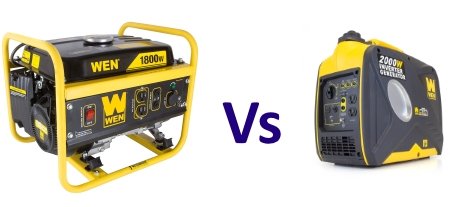
In the comparison of the inverter generator vs conventional generator, the first thing to understand is the difference between the two. Conventional generators are what we’ve had for decades. The gas or propane powered motor is attached to an alternator that generates AC power, though some deliver DC power. The frequency of the power fluctuates along with the RPM, making this type of generator risky to use to power electronics because power spikes could damage the sensitive electronics. Inverter generators use an inverter alternator; it produces three phase AC power that is converted to DC power and then inverted back to AC power. The power produced through this process often has less than 3% total harmonic distortion (THD), making it safe to power a modern laptop computer, smart phone or big screen TV. Smart electronics will fry if THD exceeds 6%.
The Benefits of Inverter Generators
Inverter generators usually have an idle feature or low power feature that lets it run at a lower level when demand is lower. Traditional generators are usually either on full power or off. This means inverter generators can run at half or quarter power when the load requires it, saving gas.
When inverter generators are running at partial capacity, they are much quieter than traditional generators.
Inverter generators are typically smaller and lighter than traditional generators; this makes them more portable. There are inverter generators capable of powering an RV or critical appliances in your home that weigh less than fifty pounds.
The Benefits of Traditional Generators
Traditional generators may be larger on average, but they also come with larger fuel tanks. While many small inverter generators have a one or two gallon gas tank, there are traditional generators with much larger fuel tanks. You’ll be filling up the gas tank once a day with a traditional generator while it runs 24 hours a day, instead of refilling an inverter generator two or three times a day.
When you really need the power, the size of the generator matters. It is rare to find an inverter generator with more than 4000 watts of power. Conversely, you can find traditional generators with 10,000, 20,000 or fifty thousand watts of power – enough to power the average home with all the appliances running. The typically inverter generator would in contrast let you run the fridge and AC but nothing else. Traditional generators are cheaper than inverters.
Observations about Generators
All generators that generate 110 volts without an adapter are inverter generators, since they must have an inverter circuit in the generator to put out current immediately compatible with your appliances. Inverter generators, though, often provide multiple outlets to plug things in, such as a 12 volt DC plug, standard three prong plug for appliances and USB charging port.
Many inverter generators can be paired with a similar unit to double your power capacity, as long as you have the right cable to do so. Traditional generators do not have this capacity at all.
There are some conventional generators that are flex fuel, able to run off diesel, bio-diesel or gasoline. It is almost unheard of to find an inverter generator that can run off anything but propane or gasoline. However, not all traditional generators can run on more than one type of fuel. A few expensive RV inverter generators can switch from propane to gasoline.


Leave a Reply