The New EU Regulations on Vacuum Cleaners
What are the New EU Regulations on Vacuum Cleaners?
The European Union, in the name of energy savings, essentially banned vacuum cleaners that had a motor capable of generating 1600 watts. This ban included the manufacture of new vacuum cleaners that were this powerful (or more powerful) as well as the import of vacuum cleaners this powerful.
By 2017, the most powerful motors allowed in a vacuum cleaner will be only 900 watts.
Impact on the Market
 The new EU regulations on high powered vacuum cleaners had an immediate impact on the sales of vacuum cleaners with motors capable of generating 1600 watts or more before the September 1, 2014 deadline. Sales of vacuums this powerful quadrupled in sales. Tesco reported that vacuum cleaner sales spiked 44% in the last two weeks before the initial ban went into effect, and Co-Operative Electrical said sales spiked 38%. Online retailer AO.com reported 40% increases in vacuum cleaner sales and 380% increases the two weeks before the ban of powerful vacuums. Dyson’s sales went up 78% after the announcement of the new energy saving guidelines. Argos said its products were in compliance with the 2014 wattage restrictions and still saw vacuum sales go up 97%.
While sales spiked for powerful vacuums like the Miele S8330 that runs at 2200 watts, the average vacuum cleaner runs at 1800 watts. The regulations will cause a dramatic shift in available product offerings as the power allowed drops. Some of the most powerful vacuums will disappear, and consumers will see a number of other changes to the market. Vacuum cleaner sales in the month before the ban resulted in 3% of all customers buying two ore more vacuum cleaners, a sign of customers stocking up on high power vacuum cleaners.
Impact on Consumers
Consumers in general are not happy with the new motor power restrictions. A 2012 Mintel report said that 76% of customers considered suction the most important criteria when buying a vacuum cleaner, and suction is directly related to motor power.
Of the top seven vacuum cleaners recommended by Consumer Reports, five of the models it considers a “Best Buy” blending low price with high performance are all illegal under the new regulations.
Existing units that were already in the warehouse before the ban can still be sold, but this means consumers will face stiff competition and rising prices for the remaining 1600, 1800 and more powerful vacuum cleaners.
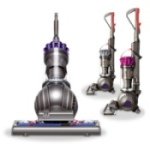
So no more Dyson vacuums for EU?
Dyson vacuums are going to be hard to get a hold of unless you buy a refurbished one, because Dyson has never made a vacuum cleaner with a motor less than 1400 watts. The Bosch Pro Energy vacuum sold out at many retailers, because of its 2400 watt motor and $150 (99 Euro) price tag.
Germany vacuum cleaner manufacturers who promoted the new regulations had a vested interest in them, since many of their vacuum cleaners already meet the new, stricter standards. So you’ll see a lot more German vacuums on the market while Dyson vacuums become essentially illegal.
Vacuum cleaners will be rated from A to G on several factors, including cleaning performance, dust emissions and energy use. As the allowed motor wattage goes down, expect to see rushes on the most powerful vacuums still allowed and available. And as the allowed motor power decreases, the highest rated A vacuums will become weaker over time. German vacuum manufacturers wanted ratings based on tests with vacuums with bags that lose suction when loaded with dust. Dyson wanted vacuums tested with dust in them, as well as cost models (and ratings) to factor in maintenance costs like replacement bags. Dyson lost the ratings debate, and so its vacuums received lower scores than bagged models.
In the short term, the move may drive down sales of bagless vacuums, since ratings are biased against them. Conversely, it may drive an increase in installations of central vacuum systems that don’t fall under the regulation. If so, that increase won’t last long, since energy efficiency regulations are being studied for everything from home exercise equipment to hair dryers.
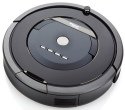
Another result may be increased popularity of robot vacuums. Dyson’s Eye robot vacuum’s motor is only 200 watts – and thus allowed under the new rules. It may be the only Dyson vacuum in compliance with the new EU regulations on vacuum cleaners. The Roomba vacuum and other robot vacuums are also free and clear under the new rules.
Long Term Effects
 Stiftung Warentest warned that only 3 vacuums it tested cleaned well at 900 watts, meaning only three vacuums available today meet the future, stringent standards and still do a good job. The EU’s answer was that manufacturers will just need to improve performance.
Dyson is legally challenging the ruling, stating that it results in consumers having to vacuum for longer periods of time to get the house just as clean – using the same amount of energy overall but wasting more of their time. That may change the ratings for bagless vacuums or energy efficiency rules or nothing at all.
German manufacturers wanted energy mandates that put the top motor power at 700 watts, a rating that some German manufacturers already meet but almost no one else does. If those rules go through, the market will be essentially German made machines and robot vacuum cleaners.


Leave a Reply