In this review of the P3000 PowerSmart 3000-Watt Inverter Generator, model 30545, we’ll look at the pros and cons of this Briggs and Stratton portable generator. We’ll also share observations about the Briggs & Stratton model 30545 inverter generator advertised for camping and RV dwellers.
Pros of the Briggs & Stratton P3000 - 30545 Model
The unit has a large one and a half gallon fuel tank that can run the generator for up to ten hours on half load. It will run all afternoon on the full load.
 Like most inverter generators, it puts out high quality power safe to recharge your sensitive electronics. A traditional generator may more than 6% total harmonic distortion, which will fry your smart phone, smart TV or laptop.
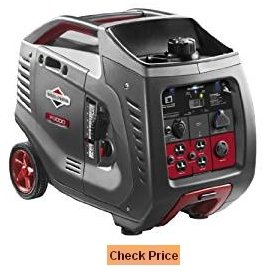
It isn’t just powerful enough to supply several electronics or appliances but has the plugs built in to handle them. The generator comes with one USB port, one 12 volt DC outlet with an RV adapter, and four household outlets. Unlike many other portable inverter generators, it has a rubber parallel port cover to keep debris out of the ports when not in use.
It comes with a two year limited warranty. Whether or not the manufacturer honors the warranty depends on where you buy it.
It weighs sixty pounds without any fuel in it. It comes with both twin handles for carrying by one or two people. It comes with a telescoping handle for pulling along like luggage by the built-in 6 inch wheels. It is truly portable.
The RV portable generator comes with a display to show you how many watts being pulled so you know how much load is on the generator and whether or not you can safely plug in one more item.
Cons of the Briggs & Stratton P3000
The generator is more expensive than average, and the price can seem expensive compared to the other Briggs and Stratton generators. Two of them linked together gives you around 4000 watts for a little more money than the cost of a single P3000 PowerSmart generator. It will run smaller RV air conditioners but will struggle and may not work with a 15000 BTU RV AC.
It is loud for an inverter generator. There isn’t much sound insulation in the casing.
Some units have problems with the idle speed varying. This can lead to it running so rough it stalls.
The oil drain slide is not part of the chassis. As the oil drains, some of this ends up in a crack in the unit where you can’t clean it out. From there, it eventually drains out through the gaps in the case.
Reaching someone on their help line is an adventure in and of itself. Getting service through their website is even harder.
Observations about the Briggs & Stratton P3000
While the portable generator proudly announces P3000 and 3000-watt capacity, that is only at the start. Running power production is 2600 Watts. Be careful it actually runs critical appliances like an air conditioner before you buy it. It doesn’t have an electric start. Fortunately, the pull start usually starts on the first try.
The P3000 Briggs & Straton generator is often sold as a “power pack” with the 2200 Watt inverter generator by the same manufacturer, as well as a cable to connect the two. The “power pack” provides over 5000 watts of running power.
While all inverter generators are more efficient than traditional generators, this particular portable model doesn’t meet California’s stringent environmental and efficiency regulations. However, like all inverter generators, it can run at half load or quarter load, saving fuel and extending run life on the same tank of gas.
This unit puts out significant radio frequency interference. This will interfere with AM/FM radio, ham radio and drone usage near the generator.
There are reports of some new units leaking oil from the get-go. If you encounter this, return it immediately for replacement or repair. The unit holds about 20 ounces of oil, so a leak will create a major mess in your vehicle or an environmental mess where it is located outside.
This portable generator only runs on gas. There are other small generators that will run on both gas and propane.
Summary
This inverter generator meets the minimum needs for most RV users like running a small AC or several small appliances by itself. It isn’t the cheapest option, but it isn’t the most expensive. While the unit rarely experiences problems, those few that do leak oil or vary in idle speed too much are hard to get serviced. If it works well, it supplies multiple appliances through as many ports and is safe for use with your smart devices.


Leave a Reply