There are different ways to view pool cleaning devices: on the one hand you get those people that see them as a specialized device that can really take all the hassle and manual labor out of pool cleaning and provide you with a great result; on the other, they can be seen as costly, ineffective and more trouble then they are worth. The latter argument tends to come about when buyers do not understand the purpose and mechanics of the product they are buying or have simply bought the worst match for their particular pond. The following guide to the different types of automatic pool cleaners will examine the styles, pros and cons of various sub-sections of in-ground and above ground pool cleaners to help you with your purchase.
Automatic Suction Side Cleaners
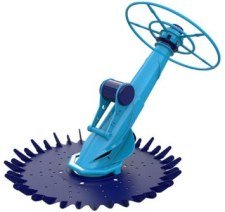 The first style of pool cleaner to mention is the one that is currently the most widely used – largely due to the fact that it is also the cheapest variety on the market. As the name suggests, the primary action of this cleaner is suction. The water is sucked through a hose into the pool’s filtration system, all the debris and particles on the edges are filtered out and the clean water returns to the pool. Additionally, it is this suction action that drives these in ground pool cleaners; there are no motors or any propulsion system other than this natural force, but this does lead to a slightly erratic movement across the pool.
Many pool owners will head straight for this option because the low cost makes it seem like an obvious bargain and the simple design makes it look rather foolproof but there are some potential downsides to be aware of. Firstly, this style is best suited to smaller pools where there is only light debris. Secondly, the initial savings can be balanced out by high running costs because of the use of the pool’s own system and maintenance costs due to the impact on the pump.
Automatic Pressure Side Cleaners
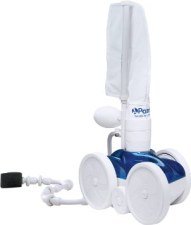 In many ways, these contraptions are quite similar to the automatic suction side cleaners because they are simple, self-propelled devices with similar aims, only this one uses water pressure and turbulence to dislodge the dirt and debris instead of suction. Again, these machines are fairly simplistic in their construction and move randomly under their own power to remove dirt via filtration and, just like the suction variety, they can be criticized for the amount of electricity they use and general energy inefficiency. This is due to the need to use a booster pump to add pressure to water to create an effective disturbance – the device itself may not need much power but it is this reliance on the pool’s system that causes problems. This option is much better for larger pools than the suction kind and generally requires less maintenance but it is still seen as being rather old-fashioned, it has its filtration limitations – with finer particles of sand sometimes being left behind - and it is more expensive to buy.
Robotic Pool Cleaners
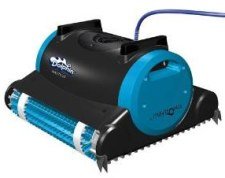 The limitations and random wanderings of these automatic pool cleaning devices perhaps are an old-fashioned approach these days when there are robotic options that can do more and offer a highly effective clean. These above ground pool cleaners are an appealing option when cleaning seems like too tough a task because they can negotiate the surfaces with ease, use motors and chips and are much lower maintenance than the previous options.
One motor on these robotic creatures sucks water into a filter bag to start the cleaning process while the other drives rubber tracks and brushes to dislodge the dirt from the bottom and sides of the pool. Meanwhile, microchips and sensors aid the machine with its direction across the pool – eliminating the random tracks of the former options – and in avoiding obstacles. These machines are more costly because of these parts but are both time and energy efficient to make up for it because they have no reliance on the electrics of the pool. It is easy to see why these robots are gaining popularity and endorsements when they offer such controlled and simple cleaning and they can even climb stairs, making them great little in ground pool cleaners too.
Solar Powered Pool Cleaners
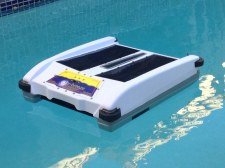 The final option to be discussed here is a more modern alternative to the above that is sure to have plenty of supporters as well as doubters. The automatic pressure side cleaners and the suction versions each show the problems of energy efficiency within pool cleaners, meaning the concept of a solar powered unit sounds like the ideal way to clean a pool with a green conscience and save a bit of money at the same time.
The only concern that buyers may have is over the effectiveness of the whole process, particularly when relying on the sun and a lithium battery. Popular models use solar panels on the top to power a skimmer and collect dirt, oil and debris from the surface, rather than going down to the bottom or sides, but makers claim this is a simple and effective way of cleaning your pool.
Choosing the Right Automatic Pool Cleaner for You
As this guide to the different types of automatic pool cleaners shows, there are plenty of different styles out there to choose from and they each have their own advantages and disadvantages. If you want to go on the cheap and simple end of the scale then the automatic suction models can seem like the most basic and functional choice but there are the risks of energy usages and the limitations on the size of the job; if, however, you want to go for high-end electronics, the robots can provide an effective clean with some neat tricks but come at a much higher prices. Pressure cleaners are a bit old-fashioned for some but then solar powered pool cleaners may be a step in the wrong direction for others. In the end, it all comes down to understanding the requirements of the pool based on its size and debris and your own preferences on style, energy usage and cost.


Leave a Reply